

Corporate Overview
Introduction
Theme Note 2026 Highlights Message from the Chairman Message from the CEO & MD Message from the Whole-time Director & CFO Report Profile Outcreating for those we ServeLTM at a Glance
Who We Are Service Offerings Industries Verticals Geographical FootprintA Year Where We Outcreated
Key Performance Indicators Awards and RecognitionDelivering Value through Business Creativity
Business Model Operating Context Stakeholder Engagement Materiality Risk ManagementCase Studies
Outcreate, Responsibly
ESG Vision and Progress Environment Social GovernanceStatutory Reports
Management Discussion and Analysis Business Responsibility and Sustainability Report Board’s Report Corporate Governance Report Risk Management ReportFinancial Statements
Standalone ConsolidatedGlobal Presence and Notice
Global Presence Notice of the thirtieth AGM
 Materiality
 into Impact
Materiality Assessment
Our approach to materiality assessment is systematic and aligned with globally recognized frameworks, including the GRI Universal Standards 2021. We conduct an annual, comprehensive assessment to identify and prioritize key issues impacting our business and stakeholders. Based on these insights, we have developed a management approach that addresses the Economic, Environmental, and Social (EES) dimensions of our most material topics.
A critical component of this process is the proactive identification and evaluation of emerging ESG risks. Our Enterprise Risk Management (ERM) function integrates these insights through risk assessments, audits, and performance reviews, with outcomes reported to the Board-level Audit Committee to inform oversight and strategic decision-making. This integrated approach enables us to continuously refine our priorities and respond effectively to evolving stakeholder expectations and business risks.
Recognizing the dynamic nature of material issues, we incorporate multiple factors into our assessment framework, including the economic implications of our business model, alignment with organizational values, industry benchmarks, stakeholder perspectives, and emerging societal trends. We prioritize material topics through structural stakeholder engagement and internal deliberations at the management level.
LTM's ESG Materiality Matrix
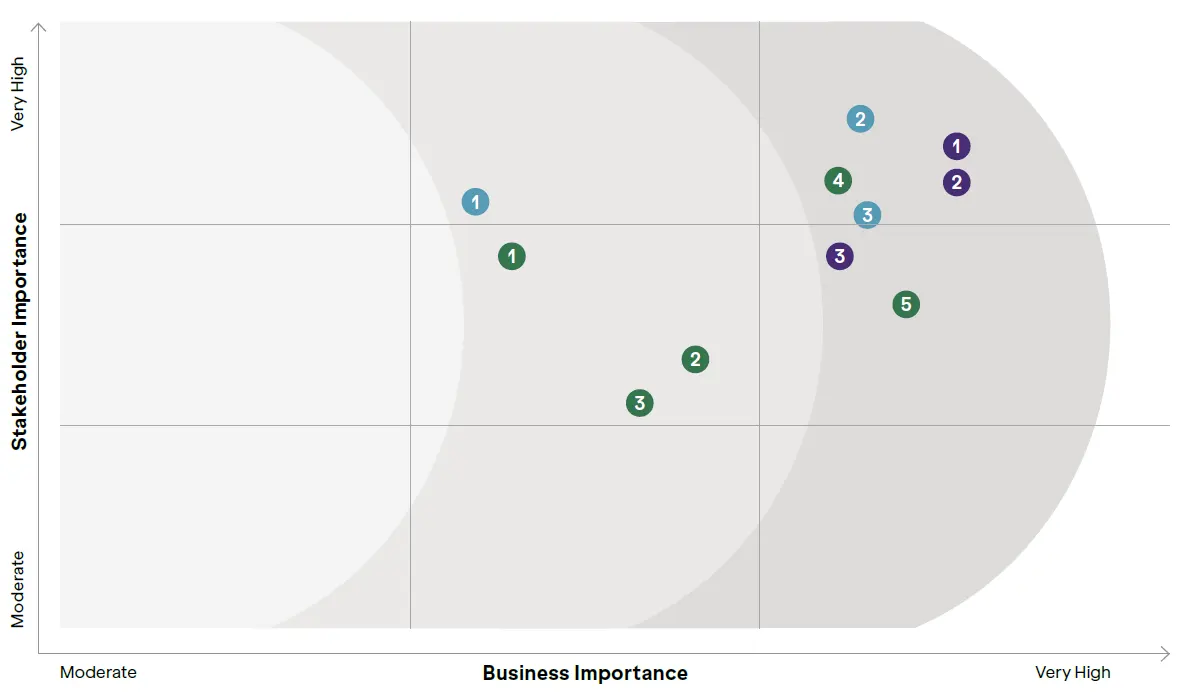
Environment
- 1 Water Management
- 2 Waste Management
- 3 Supply Chain Sustainability
- 4 Climate Change
- 5 Green Tech and Innovation
Governance
- 1 Corporate Governance
- 2 Business Ethics
- 3 Data Privacy and Risk Management
