Unlocking Retail Excellence: AI-Powered Perfect Store Strategy and Assortment Planning for CPG

In today’s retail landscape, CPG brands don’t win by chance. They win by outcreating at the shelf by placing the right products, in the right locations, at the right time, every day. That requires more than execution discipline. It demands business creativity: the ability to rethink legacy approaches, reframe complexity, and turn insight into action at scale.
This blog combines a shopper-led Perfect Store framework, agile assortment strategies, and AI‑enabled execution to help leaders move beyond periodic reviews toward real-time, insight-backed decisions. The goal is simple but ambitious: unlock growth, strengthen brand loyalty, and own outcomes where it matters most—on the shelf.
The real challenge: Shelf complexity has outpaced legacy thinking
The core challenge many CPG brands face is how to consistently deliver the perfect store experience. Modern retail shelves are shaped by expanding product ranges, regional and channel‑specific shopper preferences, and fragmented data sources. Yet many brands still rely on traditional approaches built on static plans, occasional audits, and lagging sales insights that are designed for a simpler era.
The result is visible and costly, including frequent out‑of‑stocks, misplaced items, sub-optimal usage of shelf space, and execution gaps around promotions leading to erosion of sales and shopper trust. At the same time, many shelves remain crowded with low‑performing SKUs taking up valuable space, while high‑velocity and high‑potential products struggle to stand out.
Brands are also under pressure to adapt faster to changing retail conditions and shifting shopper expectations, including greater demand for relevance, convenience and seamless digital touchpoints. In short, what’s missing is not effort, but an integrated, data-driven way of thinking disruptively about shelf execution and CPG assortment planning. Without it, brands miss good revenue opportunities and risk delivering suboptimal shopper experiences, which can undermine brand equity in a highly competitive market.
Reframing the perfect store
The Perfect Store is no longer a checklist, it’s a shopper-centric system designed to translate insight into consistent, scalable execution across channels, categories, and customer segments.
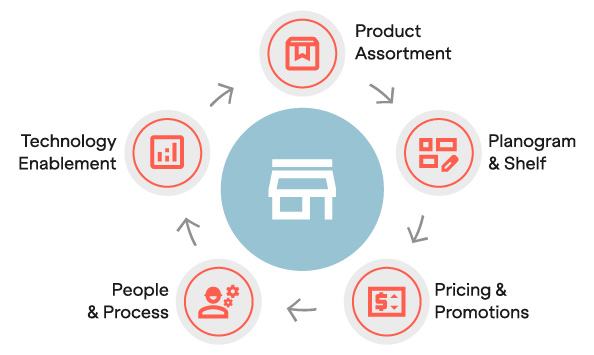
At its core are the six Ps, product, placement, price, promotion, people, and process, brought to life through five tightly connected pillars that enable brands to reframe how shelf decisions are made and acted upon.
Five pillars that turn insight into shelf impact
1. Product assortment optimization
• Employ data-driven analytics and AI to continuously refine the product mix tailored to regional and channel-specific consumer preferences.
• Prioritize stocking of high-demand SKUs with robust inventory management practices to maintain availability.
• Rationalize slow-moving or redundant SKUs to prevent shelf crowding and increase overall profitability.
• Align product bundling and adjacency (placing complementary products together) to enhance cross-selling opportunities and shopper basket size.
2. Planogram and shelf compliance
• Ensure store teams are consistently following planograms, so that each product appears in its intended spot on the shelf.
• Apply AI‑enabled visual intelligence to identify shelf issues in real time, such as, stockouts, incorrect placements, and pricing errors.
• Maintain visual consistency with brand standards to influence shopper behaviour positively and reduce decision fatigue.
• A strong planogram compliance can boost sales by nearly 7%, reinforcing its centrality to the perfect store concept.
3. Pricing and promotion effectiveness
• Use real‑time analytics to keep a close watch on pricing compliance and how promotions are executed in store.
• Optimize trade spend by prioritizing promotions that adds new sales instead of subsidizing the existing sales.
• Design targeted promotions based on localized consumer inputs, to maximize promotional effectiveness and ROI.
4. People and processes
• Equip sales and field teams with real-time insights, mobile tools, and clear success guidelines for in-store execution excellence.
• Foster collaboration between suppliers, retailers, and merchandisers to ensure goal alignment and rapid issue resolution.
• Continuous training, supported by clear feedback loops keeps store compliance high and shopper experience consistent.
5. Technology enablement
• Adopt AI in retail execution to gain detailed, continuous visibility into shelf conditions and how shoppers engage with products.
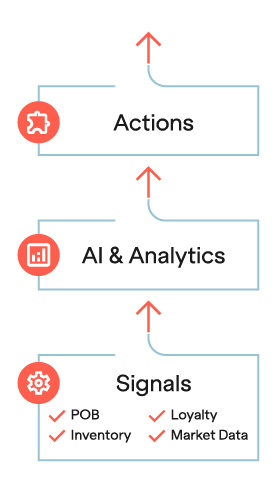
• Integrate multiple data sources like POS, inventory systems, and shopper analytics to drive a comprehensive view of store performance.
• Utilize predictive analytics to dynamically adjust assortment, pricing, and promotional strategies based on market trends and competitor activity.
Assortment planning: Best practices
Effective assortment planning extends far beyond deciding which SKUs to carry. It calls for a broader, integrated view that brings together shopper insights, past and forward‑looking sales data, competitive context along-with supply-chain realities.
Key best practices include:
1. Localization and customization: Localize and customize assortments using AI‑driven segmentation to reflect regional preferences, demographics, and seasonal demand.
2. SKU rationalization: Monitor how products perform in each store to spot slow movers early and make timely changes that keep shelves productive and operations efficient.
3. Consumer-centric focus: Factor in pack sizes, pricing, and packaging choices that resonate with target consumers to meet shopper needs better.
4. Cross-functional collaboration: Effective CPG assortment planning depends on close alignment across functions like, marketing, sales, supply chain, and finance, to ensure that decisions are operationally sound and financially viable.
5. Agile Updates: Use ongoing data feeds and AI insights to update assortment decisions more frequently, moving away from yearly or quarterly static plans to more agile, demand-driven approaches.
Technology enablement: From signals to actions
AI‑powered shelf recognition provides real‑time visibility into compliance, pricing, and placement issues. When combined with POS, inventory, loyalty, and external market data, brands gain a unified view of shelf performance.
Predictive models then recommend smarter adjustments, supported by guided actions for store teams. This closed-loop execution model enables continuous improvement and consistent performance at scale.
KPIs and measurement
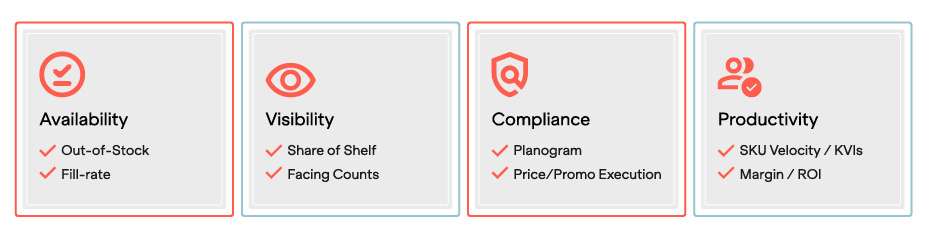
Perfect Store execution should be anchored to clear objectives and measurable outcomes. Effective KPI frameworks typically include:
- Availability: stock-out rate, on-shelf availability, inventory fill rate
- Visibility: share of shelf, facing counts, display quantity
- Compliance: planogram compliance, price integrity, promotion execution rate
- Productivity: SKU velocity/KVIs, basket size impact, gross margin
The focus isn’t reporting, it’s root-cause analysis and targeted intervention.
Conclusion: It’s time to Outcreate at the shelf
Perfect Store excellence, paired with intelligent assortment planning, is no longer optional, it’s a strategic imperative.
Start with a clear and shared definition of perfect by retailer and categories. Establish a unified data backbone, pilot AI in retail execution in priority markets, and evolve from periodic reviews to real‑time insights along with closed‑loop actions at scale.
The impact is measurable:
- Planogram compliance can lift up the sales by up to ~7%
- Localized assortment optimizations can deliver 1-2% incremental annual sales growth
- Well targeted promotions can deliver sales lift of up to 10-20%
- AI-optimized campaigns can deliver 15-25% higher incremental volume
A practical next step is a 90‑day pilot in one or two priority regions, enabled by image recognition, guided field execution, and monthly assortment updates. Monitor the results closely and translate the learnings into a clear playbook for broader rollout.
Because the future of retail doesn’t belong to those who optimize incrementally, it belongs to those who think disruptively and own outcomes.
References:
i. Thinking Holistically About Your CPG Product Assortment Strategy, Clarkston Consulting: https://clarkstonconsulting.com/insights/cpg-product-assortment-strategy/
ii. AI-Based Customer-Centric Product Assortments Boost Incremental Sales Growth, Business Wire: https://www.businesswire.com/news/home/20230627866445/en/AI-Based-Customer-Centric-Product-Assortments-Boost-Incremental-Sales-Growth-SymphonyAI-Retail-CPG-Research-Finds
iii. AI in Consumer-Packaged Goods: The Complete 2025 Guide: https://sranalytics.io/blog/ai-in-cpg-complete-guide/
 Outcreate Your Business
Outcreate with LTM
Outcreate Together

It’s time to Outcreate