Oracle on GCP: One Foundation for Modern Applications, Intelligent Data, and AI at Scale
For years, enterprises have been forced to choose between where their data lives and where intelligence happens. That trade-off is now starting to disappear.
This shift is especially critical in industries where operational precision directly impacts business outcomes. Healthcare distribution companies operate in an environment where fill rate, on-time delivery, product availability, and traceability are just as essential as cost considerations.
For decades, I’ve seen enterprises build their digital empires for supply chains and order-to-cash processes on Oracle's trusted database systems. At the same time, they've been captivated by Google Cloud's AI and analytics breakthroughs. Until now, these capabilities existed in parallel. For the first time, enterprises no longer have to choose, especially with the emergence of Oracle on Google Cloud Platform as a unified foundation.
Rethinking Multicloud: From Separation to Integration
Most multicloud strategies focus on connecting separate environments. This approach takes a fundamentally different path.
Oracle’s OCI hardware is deployed directly within Google Cloud data centers. That means the Oracle database sits on the same network fabric as Vertex AI, BigQuery, and Kubernetes services. For a company, this proximity is not just architectural elegance. It translates into near real-time updates on inventory, backorders, allocations, substitutions, shipping issues, and customer service activities.
This fundamentally changes how data and AI interact within enterprise architectures.
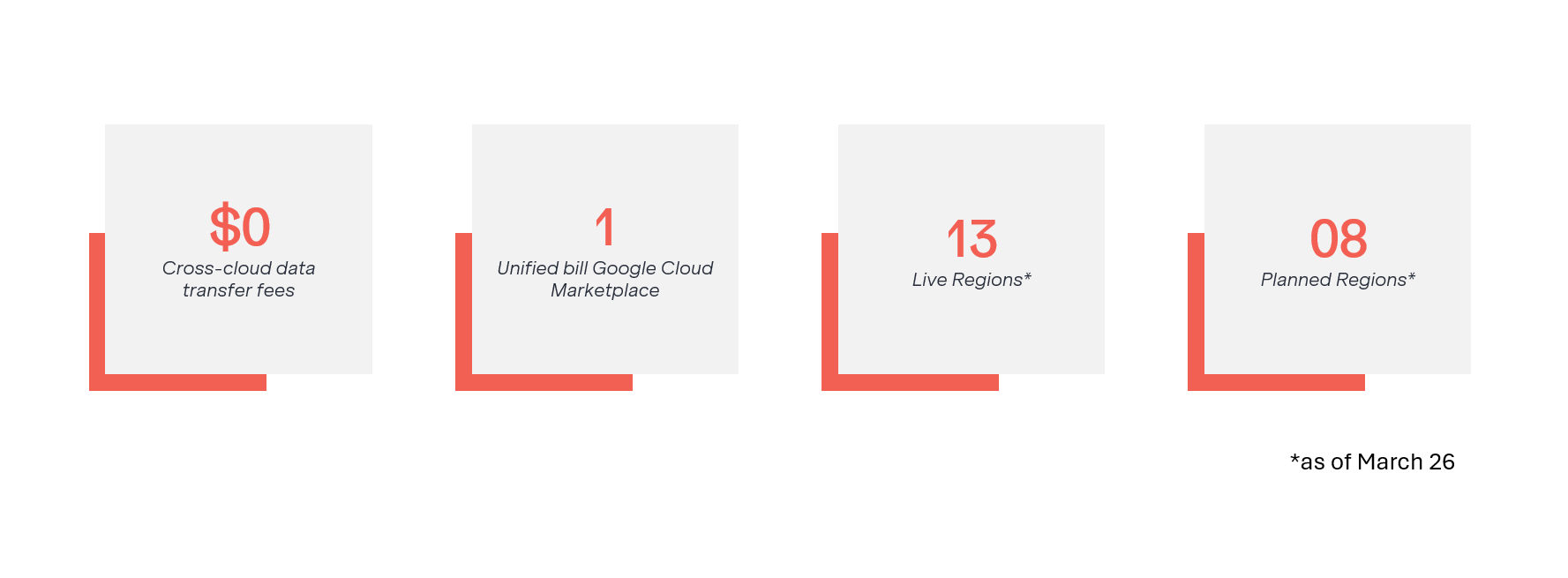
Customers can access the full suite of Oracle database services such as Oracle Exadata Database Service, Oracle Autonomous Database, and Oracle Database Zero Data Loss Autonomous Recovery Service, all managed by Oracle and billed through Google Cloud. More importantly, these services work natively with Google's data and AI ecosystem, reinforcing the value of Oracle on Google Cloud Platform in real enterprise environments.
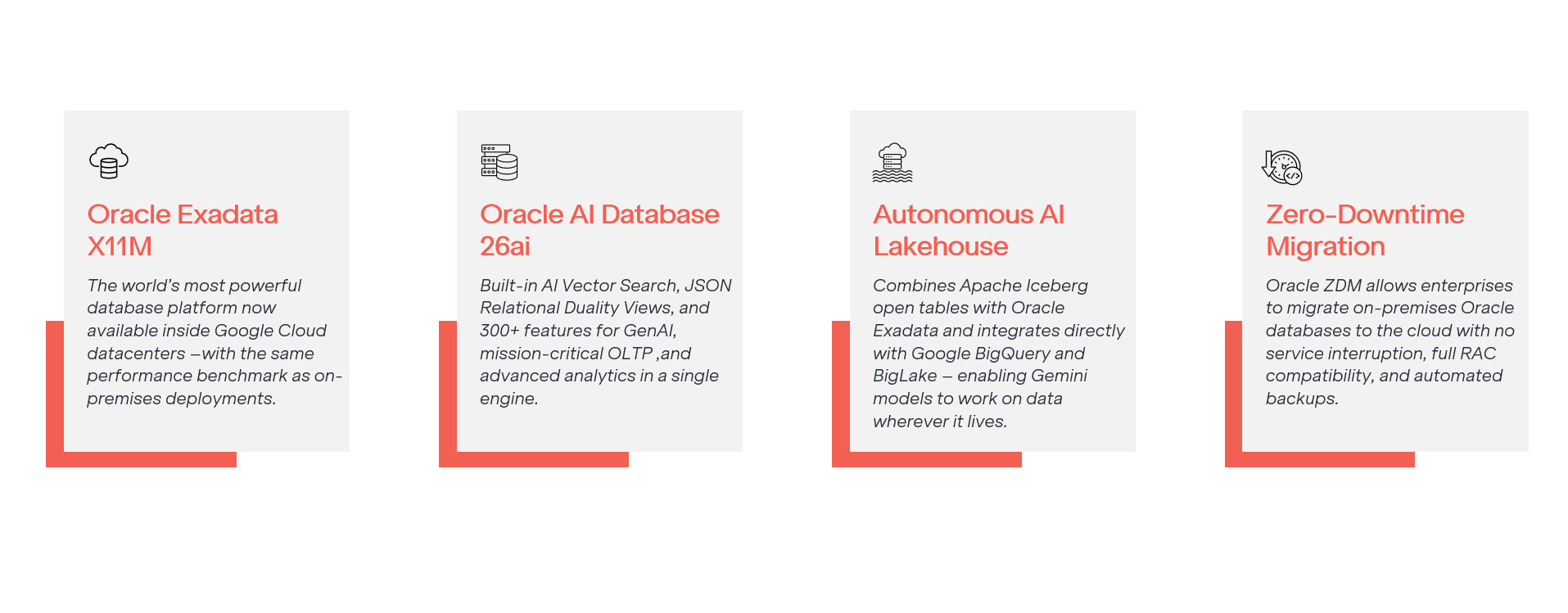
With this foundation in place, enterprises can begin to think more disruptively about how platforms are designed and used. In fact, you can run similarity search and retrieval-augmented generation (RAG) on high-powered Exadata using Gemini models, unlocking an entirely new level of synergy.
Where Data Meets Intelligence: Unlocking the AI Advantage
The real shift happens at the intersection of Oracle's converged database capabilities and Google Cloud's frontier AI models.
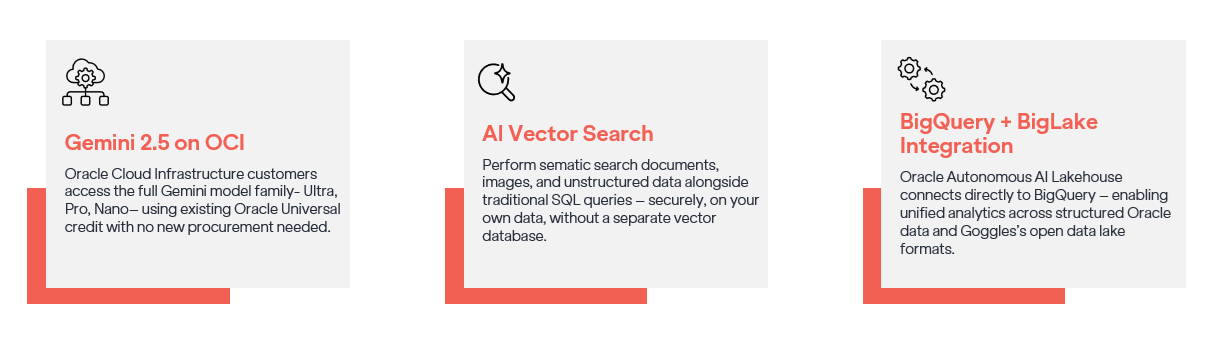
With Oracle Database 23ai, native AI Vector Search enables retrieval-augmented generation directly on enterprise data without moving or copying it. When paired with Google's Gemini 2.5 models and Vertex AI, this creates a powerful environment for building agentic workflows across operations.
I see this unlocking practical use cases across supply chain and commercial functions. Teams can generate forecasting and replenishment insights, improve allocation or shortage decisions, triage shipment exceptions, and enrich master data with far greater context. All of this happens without re-architecting the transactional backbone.
While this transforms business operations, it also redefines how developers build and deliver intelligence. Developers can query live transactional data, enrich it with semantic search, and pass it to foundation models through Vertex AI. Insights can then be surfaced through Looker dashboards, all within a single environment and with minimal latency.
At a broader level, this shift reflects something more fundamental. This is how we begin to bring human insight and intelligent systems together in a way that feels seamless rather than stitched together.
Enabling Transformation Across Oracle and Non-Oracle Workloads
Unlocking this value requires a structured approach to transformation. Modernization does not need to be disruptive to be effective. In fact, the most successful transformations are often the ones that respect what already works.
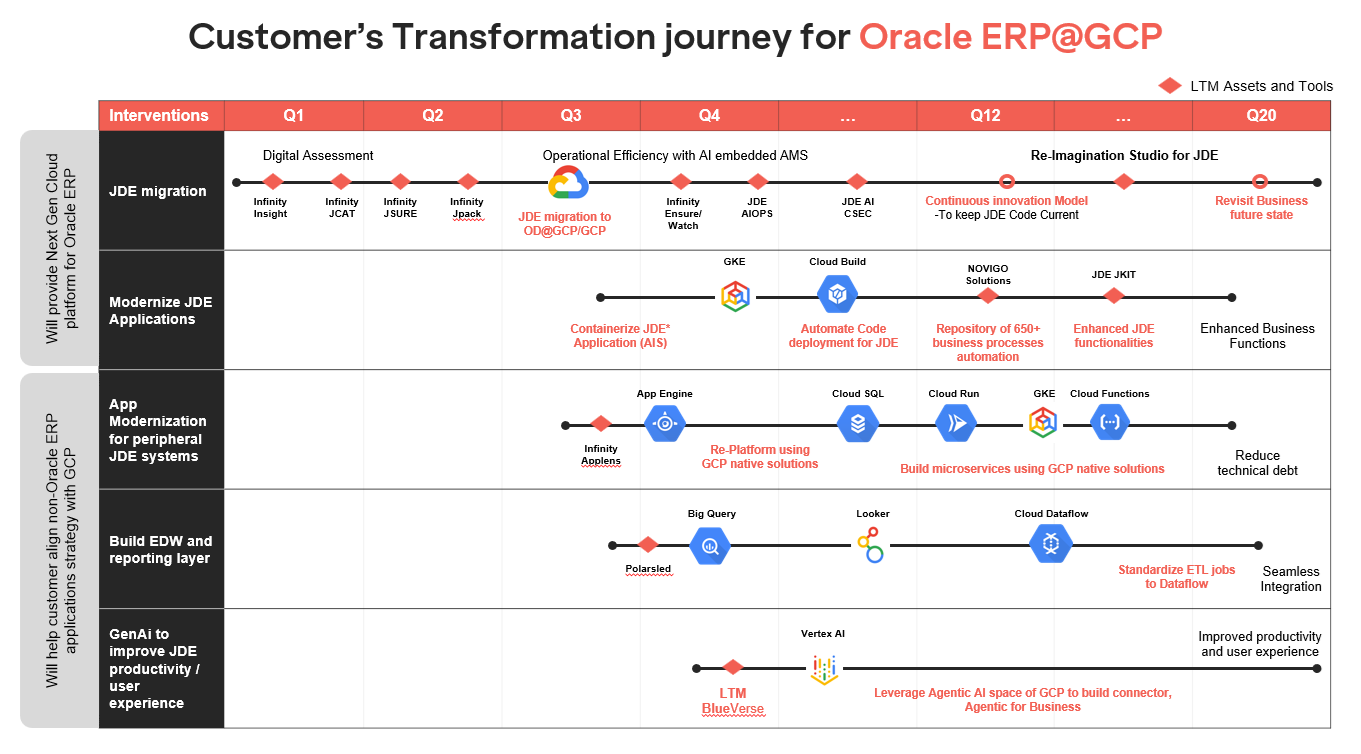
A structured approach enables Oracle ERP Transformation on GCP, allowing enterprises to modernize with confidence while preserving business continuity. This includes digital assessments, migration accelerators, and modernization through Kubernetes and CI/CD automation.
At the same time, organizations can extend their data into BigQuery and Looker while embedding AI into application management services. This allows capabilities such as exception management, forecasting insights, and knowledge assistance to evolve continuously.
This is where enterprises can reframe how transformation happens. It is no longer about replacing systems, but about unlocking new value from them. In doing so, Oracle ERP Transformation on GCP becomes not just a migration strategy, but a pathway to sustained innovation.
The Takeaway: Closing the Data-AI Divide
This brings us back to the core challenge facing healthcare distribution leaders. Success depends on making faster and better decisions without compromising operational reliability. That balance has always been difficult to achieve.
The Oracle and Google Cloud partnership represents something genuinely rare in enterprise technology. Oracle brings decades of mission-critical data management trust. Google Cloud provides the world's most advanced AI platform. Together, they eliminate the greatest friction in modern enterprise AI, the gap between where your data lives and where your AI runs. For customers, this means modernizing supply-chain execution and customer experience with AI and analytics without destabilizing the systems that run the business.
For CIOs and architects, the implication is profound. There is no longer a need to choose between protecting existing investments and adopting advanced AI capabilities. With approaches like Zero Downtime Migration, enterprises can move workloads to Google Cloud and layer intelligence on top without disrupting operations.
This enables a more controlled and accountable path to AI adoption, grounded in real business outcomes. It also reflects a broader shift in how enterprises approach transformation.
This is where the real competitive separation begins. The organizations that lead in the next decade will not simply adopt better technology. They will Outcreate by combining trusted systems with intelligent platforms, and by owning outcomes from strategy through execution.
 Outcreate Your Business
Outcreate with LTM
Outcreate Together

It’s time to Outcreate