Mastering Prompt Engineering: A Guide for Product Managers

In the rapidly evolving landscape of artificial intelligence (AI), prompt engineering has emerged as a crucial skill for product managers. As AI-powered tools become integral to product development, understanding how to effectively craft prompts can significantly enhance the end user experience of AI applications. This blog will delve into prompt engineering best practices and how product managers can leverage this skill to drive innovation and efficiency
What is prompt engineering?
Prompt engineering is the practice of designing and refining the inputs given to AI language models to elicit the most accurate, relevant, and useful responses. This technique is essential for product managers, as it enables them to efficiently extract actionable insights from vast amounts of data, make informed decisions, and streamline various aspects of product development and management.
Prompt engineering requires understanding both the capabilities of AI models and the context in which they operate. Effective prompts are specific, clear, and context-aware, guiding the AI to provide insightful and actionable information.
Examples:
Ineffective prompt: “Tell me about customer feedback.”
Effective prompt: “Summarize the top three complaints from customer reviews in the last month.”
Benefits of prompt engineering for product managers
There are several benefits of prompt engineering for product managers that enable them deliver superior products. Key benefits include:
- Better decision-making through data-driven insights
Product managers often make critical decisions based on vast amounts of data, from user feedback to market trends. Prompt engineering allows for the extraction of actionable insights from such data quickly and accurately. By crafting precise prompts, product managers can ask a language model to analyze customer reviews, survey responses, or competitive analysis reports and summarize key findings.
Example: A product manager might use a prompt like “Top 5 website functionalities that receive the most customer complaints” to make informed decisions.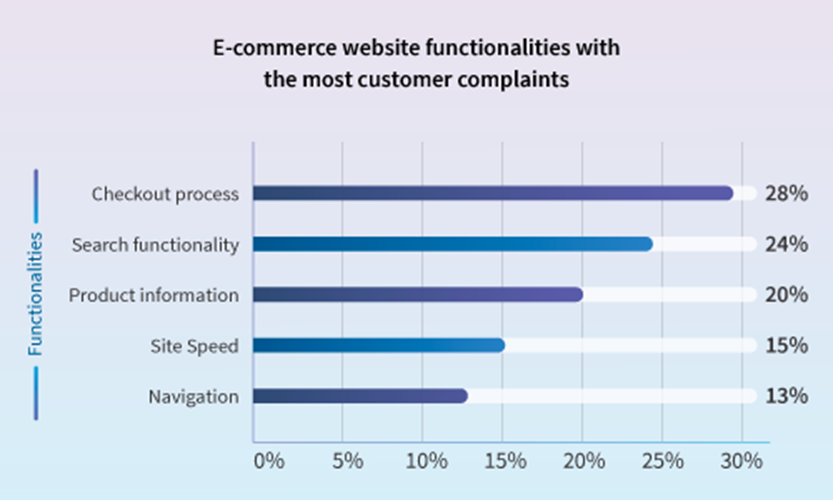
- Efficient market research
Keeping up with industry trends and competitor movements is essential for product strategy. By asking well-structured questions, product managers can receive concise reports on market dynamics, emerging trends, and competitor strategies.
Example: A prompt such as “What are the current trends in the retail market?” can yield a summary of the latest developments, helping brands stay ahead.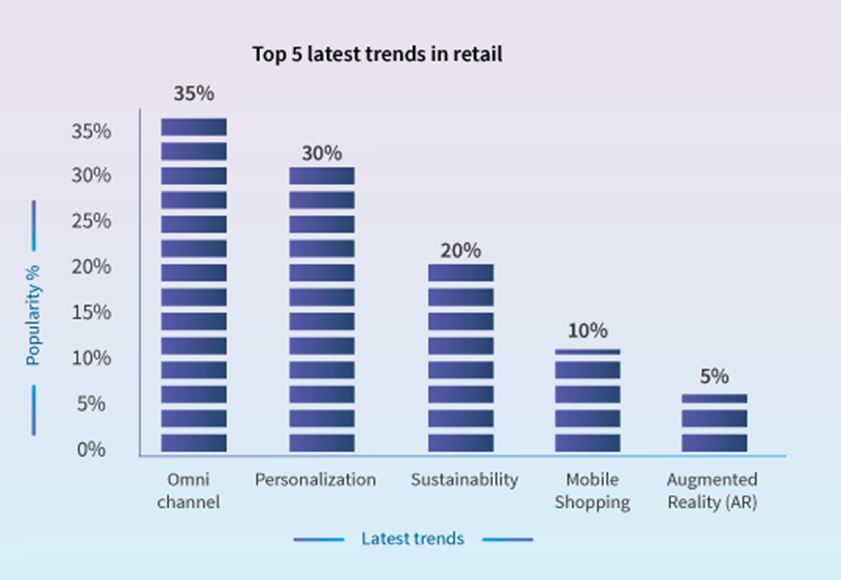
- Improved competitive analysis
Understanding the competition is crucial for product differentiation. Prompt engineering can help in creating detailed competitive analyses by comparing products based on features, pricing, user ratings, and more. This enables product managers to identify gaps and opportunities in the market.
Example: A prompt such as “Compare our product with competitor X in terms of features and user ratings” can provide a clear overview of where the product stands in the market.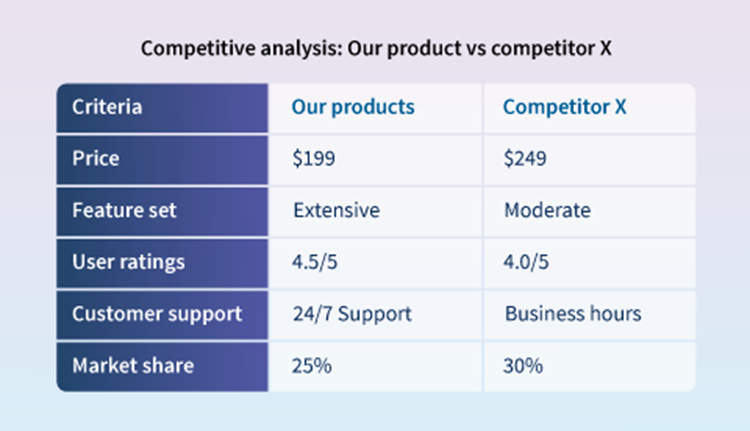
- Feature prioritization
Deciding which features to develop next is a perennial challenge. Prompt engineering can assist in prioritizing features by analyzing user needs, potential ROI, and strategic alignment. By generating a ranked list of features based on various criteria, product managers can make more objective and impactful decisions.
Example: A prompt like “Rank these potential features based on user interest and potential ROI” can help in creating a data-backed feature roadmap.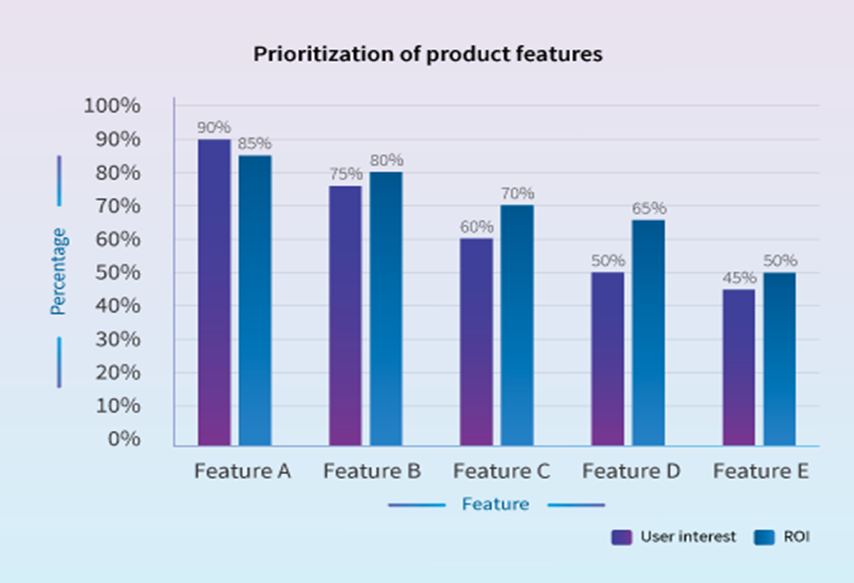
Best practices for crafting effective prompts
By understanding and applying best practices for prompt engineering, such as clarity, specificity, and iterative refinement, users can harness the full potential of AI models to achieve more reliable and insightful results. Here are a few best practices for prompt engineering.
- Be clear and specific: Ensure prompts are precise and focused on extracting the desired information without ambiguity.
- Use open-ended questions: Encourage detailed responses by avoiding yes/no questions.
- Include contextual details: Provide context or specific parameters to guide respondents.
- Avoid leading questions: Frame prompts neutrally to avoid biasing responses.
- Provide multiple response options: Offer structured options where appropriate, to facilitate data categorization.
- Balance length and detail: Keep prompts concise while ensuring they gather sufficient information.
- Tailor to audience: Customize prompts based on the target audience’s knowledge and experience.
Challenges and considerations
- Data privacy and security
AI systems often require large amounts of data for training and operations, raising concerns about privacy breaches and unauthorized access. Mishandling of sensitive data can lead to legal and ethical repercussions, eroding customer trust.
Potential solutions- Collect only the necessary data required for AI model training and anonymize or pseudonymize personal data wherever possible.
- Implement robust encryption methods and strict access controls to protect data both at rest and in transit.
- Adhere to regulatory frameworks (e.g., GDPR, CCPA) and provide transparent disclosures about data handling practices to build trust with users.
- Bias in AI models
AI algorithms can inherit biases present in training data, leading to unfair or discriminatory outcomes. Biased AI can perpetuate inequalities and result in unjust decisions.
Potential solutions- Ensure training datasets are diverse and representative of the population the AI system will serve.
- Use bias detection tools and techniques to identify and mitigate biases.
- Conduct regular audits of AI systems to assess fairness and mitigate biases that may emerge over time.
- Accuracy and reliability
Ensuring AI models are accurate and reliable across different scenarios and inputs can be challenging. Inaccurate predictions or recommendations can lead to poor decision-making and operational inefficiencies.
Potential solution- Implement rigorous validation and testing protocols to evaluate AI model performance across diverse datasets and scenarios.
- Monitor AI models in production continuously to detect and correct performance degradation or inaccuracies promptly.
- Incorporate feedback mechanisms to iteratively improve AI models based on real-world performance and user interactions.
- Hallucinations
AI models, especially chat agents, can sometimes provide answers that are made up or nonsensical. This leads to erosion of trust, raises ethical concerns and has massive legal implications if there are decisions made from AI models.Examples:
- “When did Leonardo da Vinci paint the Mona Lisa?” – “Leonardo da Vinci painted the Mona Lisa in 1815.” (Incorrect: The Mona Lisa was painted between 1503 and 1506, or perhaps continuing until 1517.)
- “Tell me a fact about George Washington.” – “George Washington was known for inventing the cotton gin.” (Incorrect: Eli Whitney invented cotton gin)
Potential solution
- Have humans who assess model outputs for correctness, relevance and accuracy.
- Do adversarial training that will challenge the confidence and test the robustness of the model.
The future of collaboration between humans and AI
In the coming year product managers will work alongside AI systems in a symbiotic relationship, where AI augments human decision-making with data-driven insights and predictions. This will lead to enhanced collaboration tools that combine human expertise with AI capabilities. AI-driven tools will become more seamlessly integrated into everyday business applications including CRM systems, project management tools, and customer service platforms, enabling advanced analytics and insights. Moreover, AI tools will drive a higher degree of personalization and contextual awareness for better end user experience.
Conclusion
Prompt engineering is a powerful tool that will transform the way product managers work. As language models continue to evolve, the role of prompt engineering in product management will only become more critical, enabling product managers to deliver exceptional products that meet market needs and exceed user expectations. Embracing this technology is imperative to stay competitive in today’s dynamic market landscape.
References
- What is prompt engineering, McKinsey& Company, March 2024, https://www.mckinsey.com/featured-insights/mckinsey-explainers/what-is-prompt-engineering
- Prompt engineering guide, Sander Schulhoff, Learn Prompting, July 2024, https://learnprompting.org/docs/introduction
- What is prompt engineering? A detailed guide for 2024, Matt Crabtree, Datacamp, January 2024, https://www.datacamp.com/blog/what-is-prompt-engineering-the-future-of-ai-communication
More Articles For You
 Outcreate Your Business
Outcreate with LTM
Outcreate Together

It’s time to Outcreate