Emerging Opensource Databases

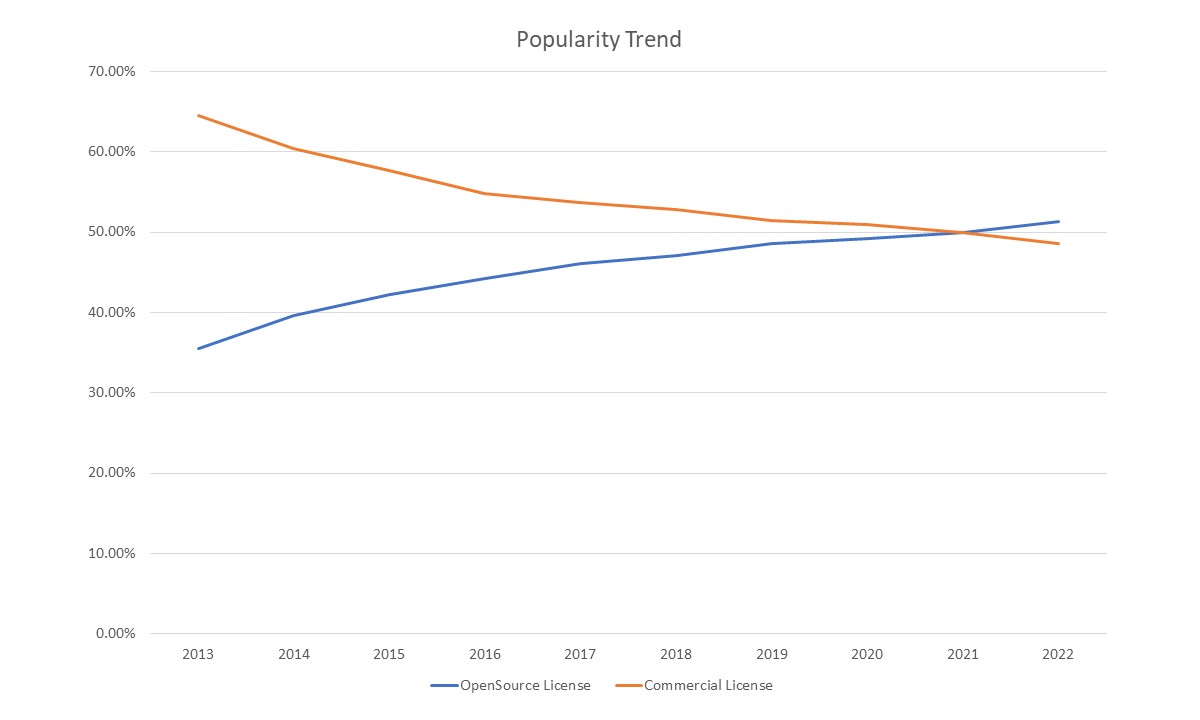
Opensource generally refers to a usable copy of software with its source code open for multiple public users. A public user can modify, use, and distribute the source code of an Opensource platform. The end users of the Opensource software can modify the source code of the software based on dynamic user requirements. Similar to other Opensource software, Opensource Databases also possess the flexibility for end-users to modify the source code. Technically Opensource Databases (OSDB) is widely used in digital initiatives and projects such as mobile, analytics, large scale data processing, unstructured data, etc. Additionally, one of the major drivers for OSDB is the incurred cost. The overall total cost of ownership for Opensource Database is much lower than most other commercial databases such as SQL server, Oracle, etc. Opensource Database popularity trend as on Jan 2022: 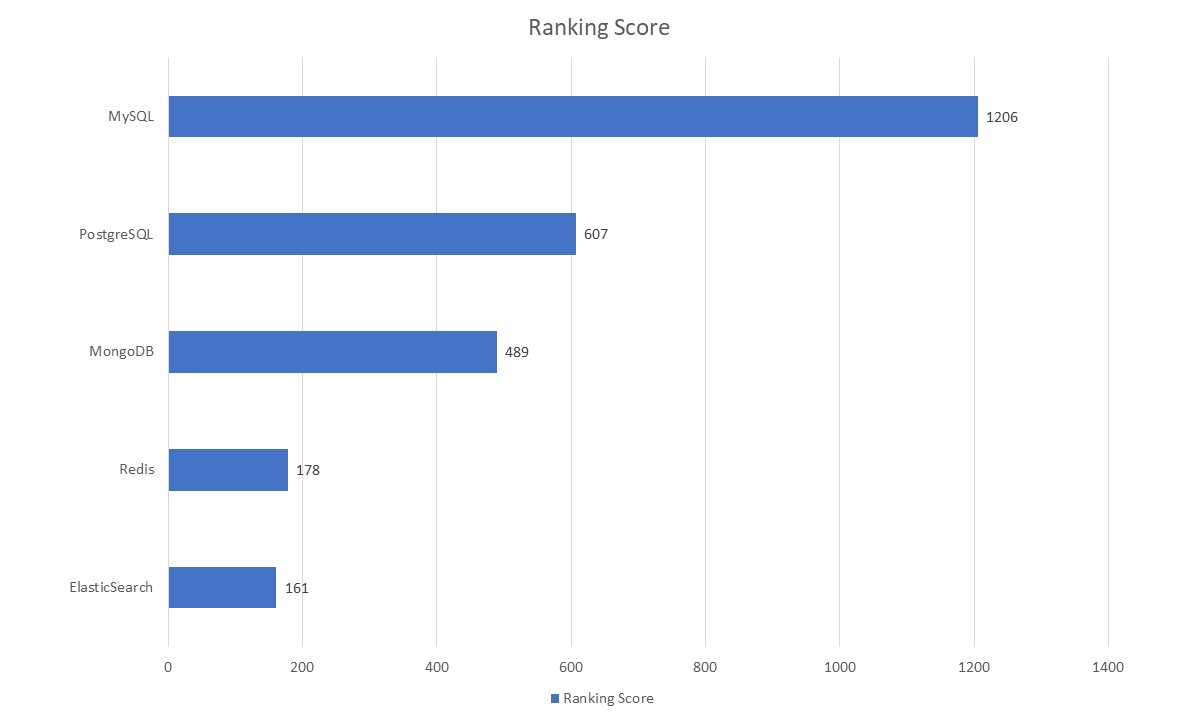
Opensource Database Use-cases
In recent times of revolutionary digital transformations across the industry, the traction for the usage of Opensource Databases is fast-paced. Some of the applications where Opensource Databases are widely being used are as below:
- Internet of Things (IoT)
- Content management systems
- Real-time analytics
- Large-scale data processing
- Un-structured data processing
- Real-time data integration
Looking at the current huge data generation trend, organizations are nowadays struggling to analyze the huge flow of structure and unstructured data. These data structures are generated from various sources such as IoT hubs, mobile devices, social media platforms, e-mails, videos, etc. Apart from all these technical use-cases, end-user cost factor and flexibility factors prove to be majorly advantageous for Opensource Databases. End-users with programming prowess can readily change the source code of the software to implement their desired functionality. On the contrary, Closed-Source Databases are devoid of this source-modification flexibility. The code in Closed-Source Databases such as SQL Server, and Oracle have source code privacy and cannot be bug-tested until the manufacturer releases bug-fix. Apart from all the above-mentioned technical superiority, Opensource Databases are also extremely suitable for low-budget projects. The licensing cost of an Opensource Database is low or in some cases free, as compared to mainstream Closed-Source Databases. Opensource Database systems provide speed to the application developer via community edition. As a result, the application developer can quickly estimate if the current solution can solve the given problem.
Opensource vs. Closed-Source Databases
Opensource Database
- The source code of Opensource Databases is public and can be viewed by any user. Opensource databases are either free or have low cost. They provide limited technical support. Opensource software is available under free licensing.
- For technical support, users need to rely on community support.
- The installations and updates are administered by users and not the owner/publisher. Examples: MongoDB, PostgreSQL, MariaDB, MySQL
Commercial Database or Closed-Source Databases
- Commercial Databases are developed for Commercial purpose only.
- The source code of the Commercial or Closed-Source Databases is not available for public viewing for the users.
- The source code viewing accesses to the end-users is restricted.
- Closed-Source or Commercial Database Software is not free to use.
- They have a remarkably high licensing cost.
- However, they provide guaranteed technical support from the manufacturer/publisher. Software updates are administered by software vendors. Examples: Oracle, DB2, SQL Server etc.
Top Five Opensource Databases
MySQL:
MySQL is a popular Opensource RDBMS tool developed by Oracle. It stores data in Tables. It uses SQL (Structured Query Language) to deal with all the data related activity such as -
- Performing DDL
- Performing DML or
- Querying from the MySQL Database
Major advantages of Using MySQL:
- Lowest total cost of ownership
- Comprehensive application development
- Web and data-warehouse strengths
- High availability
- Comprehensive support for application development
PostgreSQL:
PostgreSQL is an Opensource database management system. It uses both SQL and JSON for relational and non-relational queries. It supports advanced datatype and performance features that are generally available with the commercial database software only such as Oracle or SQL Server.
Major advantages of Using PostgreSQL:
- PostgreSQL can run dynamic websites and web-apps as a LAMP stack option.
- It is highly fault tolerant.
- PostgreSQL source code is freely available under an Opensource license.
- It allows users the freedom to use, modify, and implement it as per your business needs.
- PostgreSQL supports geographic objects. Thus, we can use it for location-based services and geographic information systems.
- It comes with low maintenance and administration costs
MongoDB:
MongoDB is a document database that builds highly available and scalable Internet applications. It offers drivers for all major programming languages. MongoDB allows us to start building our application immediately without spending time configuring a database.
Major advantages of Using MongoDB:
Document oriented database: In MongoDB, records are stored as documents in compressed BSON files. These documents can be retrieved directly in JSON format, which has many benefits such as:
- Structured and unstructured information can be stored in the same document.
- We can nest JSON to store complex data objects.
- JSON has a flexible and dynamic schema, so adding fields or leaving a field out is not a problem.
- Documents map to objects in most popular programming languages.
Scalability and Transnationality: MongoDB's scale-out architecture distributes work across many smaller (and cheaper) computers. This means that you can create an application that will handle spikes in traffic as your business grows.
Redis:
Redis is an Opensource (BSD licensed), in-memory data structure store used as:
- Database
- Cache
- Message Broker, and
- Streaming Engine
Redis provides data structures such as -
- Strings
- Hashes
- Lists
- Sets
- Sorted sets with Range Queries
- Bitmaps
- Hyperlogs
- Geospatial Indexes, and
- Streams
Redis has built-in replication and provides high availability via Redis Sentinel and automatic partitioning with Redis Cluster.
Major advantages of Using Redis:
- In-memory data structures: Well-known as a "Data Structure Server", with support for Strings, Hashes, Lists, Sets, Sorted Sets, Streams, and more.
- Clustering: It provides horizontal scalability with hash-based sharing, scaling to millions of nodes with automatic re-partitioning when growing the cluster.
- Persistence: Keeps the dataset in memory for fast access but can also persist all write to permanent storage to survive reboots and system failures.
- High availability: Replication with automatic failover for both standalone and clustered deployments.
Elastic Search: Elasticsearch is a real-time distributed and Opensource full-text search and analytics engine. It is accessible from RESTful web service interface. It uses schema-less JSON (JavaScript Object Notation) documents to store data. It is built on Java programming language, and hence Elasticsearch can run on varied platforms. It enables users to explore very large amounts of data at a very high speed.
Major advantages of Using Elasticsearch:
- Elasticsearch is developed on Java, which makes it compatible with almost every platform.
- Elasticsearch is a real-time database. In other words, a document is searchable into this engine just after a second of the upload.
- Elasticsearch is distributed, which makes it easy to scale and integrate in any big organizational set-up.
- Elasticsearch allows creating full backups easily by using the concept of gateway.
- Handling multi-tenancy is very easy in Elasticsearch as compared to Apache Solr.
- Elasticsearch uses JSON objects as responses, which makes it possible to invoke the Elasticsearch server with many different programming languages
- Elasticsearch supports almost every document type except those that do not support text rendering.
Conclusion
Opensource technologies are getting more mature day by day. They offer a robust number of functionalities for application owners, developers etc. to build a high-performance system rapidly. This also gives an opportunity to the application owners to save the cost specially from the product licensing perspective. This gives developers the flexibility to customize the code and build the system more requirement specific.
More Articles For You
 Outcreate Your Business
Outcreate with LTM
Outcreate Together

It’s time to Outcreate