Cloud Security for AI Workloads: Protecting Data and Models in the AI-Driven Enterprise
Introduction: What is Really Changing?
Over the past few years, I’ve seen AI move from isolated experiments into something far more central to how enterprises operate. What started with focused use cases such as fraud detection and recommendation engines has now evolved into complex, cloud-driven ecosystems supporting real business decisions.
But along the way, a new kind of risk has quietly emerged, and it’s not always obvious.
Unlike traditional applications, AI systems rely on constantly changing data, evolving models, and interconnected pipelines across cloud environments raising AI cloud security concerns. In one situation I came across, a simple storage misconfiguration exposed sensitive logs from a training pipeline. There was no attack, just an oversight. Yet the exposure was real.
The bigger issue? It’s not just about data loss anymore. When AI systems are compromised, they distort insights, influence decisions, and, over time, erode trust, and once that trust declines, adoption slows just as quickly.
That’s exactly why securing AI workloads in the cloud has become so critical.
Why AI Workloads Change the Security Conversation
AI systems show probabilistic behavior and may generate outputs that differ from traditional deterministic applications. Even when models remain unchanged, output quality can vary based on data, prompts, and context.
That’s where the challenge begins.
In my experience, AI environments introduce a very different risk landscape from traditional applications. Training pipelines can be manipulated, APIs unintentionally exposed, and prompt-based attacks can emerge far faster than most teams anticipate. At that point, the challenge is no longer limited to protecting systems or data. You are safeguarding the integrity of business decisions, because a compromised model can quietly influence the insights that executives and analysts trust every day.
Threat actors may poison training datasets through backdoor insertion, biased data injection, or adversarial samples that alter model behaviour.
Prompt injection remains the most significant GenAI security concern, spanning direct and indirect prompt injection, cross-domain prompt injection, and agent-manipulation attacks.
As organizations adopt Retrieval-Augmented Generation (RAG) architectures, vector databases, and enterprise knowledge repositories, they must address RAG risks like retrieval poisoning, sensitive document exposure, embedding leakage, and data lineage risks.
A Practical Security Approach: What Actually Works?
From what I’ve observed in real-world AI deployments, the truth surfaces fast; there’s no magic tool that fixes security. It has to be layered and, more importantly, designed into the system from day one, not added later.
Most organizations are now moving toward a multi-layered approach, covering data, models, APIs, identities, and cloud infrastructure with controls like encryption, access management, API protection, and continuous monitoring across AI pipelines.
However, the reality is that many teams only recognize these gaps when something breaks, and by then, the impact is already visible.
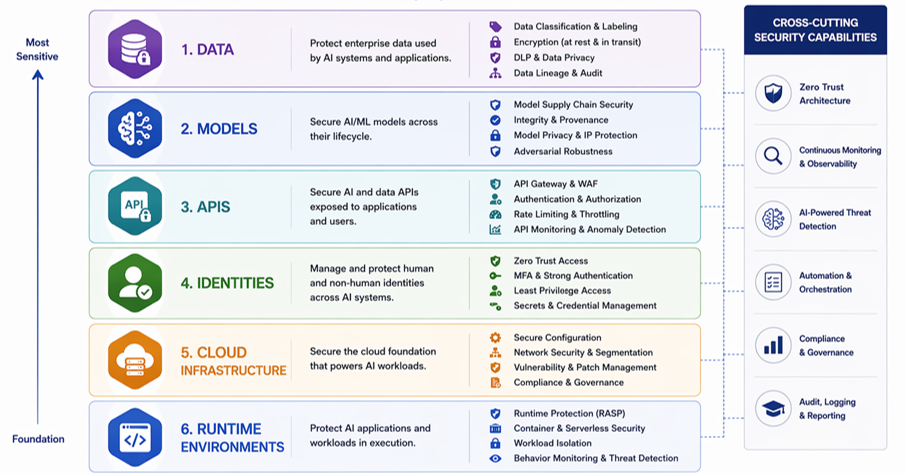 Figure 1: AI Cloud Security Stack
Start with Data, Always
If there’s one thing that consistently stands out, it’s this: AI is only as trustworthy as the data behind it. When training data is inaccurate, exposed, or tampered with, the model inevitably reflects those flaws.
In practice, risks creep in through prompts, logs, outputs, and even connected tools, often without immediate visibility.
That’s why protecting data can’t be an afterthought. Applying encryption across pipelines helps, but real impact comes when it’s combined with proper classification and continuous monitoring.
Treat Models as Intellectual Property
Organizations often focus heavily on securing data, but overlook the model itself. That’s a mistake.
From what I’ve seen, access control needs to be far more disciplined and tight identity controls, minimal privileges, and secure APIs are just the start. You also need continuous validation of outputs, and strong integrity checks, especially around models, to make sure nothing is quietly altered or compromised.
Fix the Cloud As Misconfigurations Still Dominate
Even with all the advancements, I keep coming back to the same pattern: most risks still trace back to simple cloud misconfigurations. AI only makes it more complex, spreading workloads across services, storage, containers, and APIs.
In my experience, improving security starts with removing implicit trust, segmenting environments, and continuously scanning for gaps. Because in reality, most incidents aren’t sophisticated; they happen when something basic is overlooked or left exposed.
Shift Focus to Identity, Especially Non-Human
One shift I keep noticing in AI environments is the rapid growth of non-human identities such as service accounts, API keys, and automation scripts. The challenge is, many of these end up with more access than they really need, which becomes a clear risk if compromised.
From experience, getting this under control means tightening permissions, enforcing strong authentication, securing secrets properly, and regularly reviewing usage.
Increasingly, identity isn’t just another layer; it’s becoming the central control point for securing AI environments effectively.
Monitoring: If You Can’t See It, You Can’t Secure It
AI systems don’t sit still, and that’s exactly why static controls struggle.
What you really need is visibility, not just into infrastructure, but into how things behave in real time.
Monitoring model activity, API calls, and unusual data access patterns makes a difference. But this isn’t just about detection; it’s about reacting fast.
I’ve seen enough incidents where warning signs were there, just missed. By the time teams responded, the issue had already grown beyond control.
The goal is not just detection; it’s speed.
Current AI security monitoring should include:
- Prompt anomalies
- Token utilization spikes
- Model drift
- Hallucination trends
- AI agent behaviours
- Retrieval anomalies
- Unsafe outputs
- Jailbreak attempts
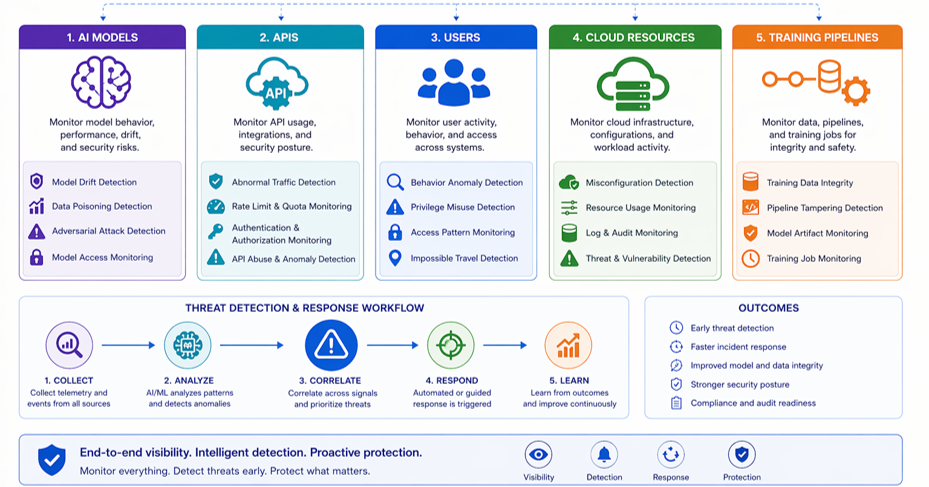 Figure 2: Monitoring and Threat Detection
Governance Isn’t Optional Anymore
As AI adoption grows, governance becomes essential. Security must align with governance and regulatory frameworks.
Strong AI governance requires regular risk assessments, clear data usage policies, responsible AI interaction rules, and regulatory alignment where applicable.
Without governance, AI adoption often drifts into shadow AI, creating visibility and security challenges that are difficult to control.
Organizations looking to operationalize AI governance can benefit from established frameworks such as NIST AI RMF, ISO/IEC 42001, OWASP Top 10 for LLMs, MITRE ATLAS, and the EU AI Act, which help translate governance principles into actionable security and compliance practices.
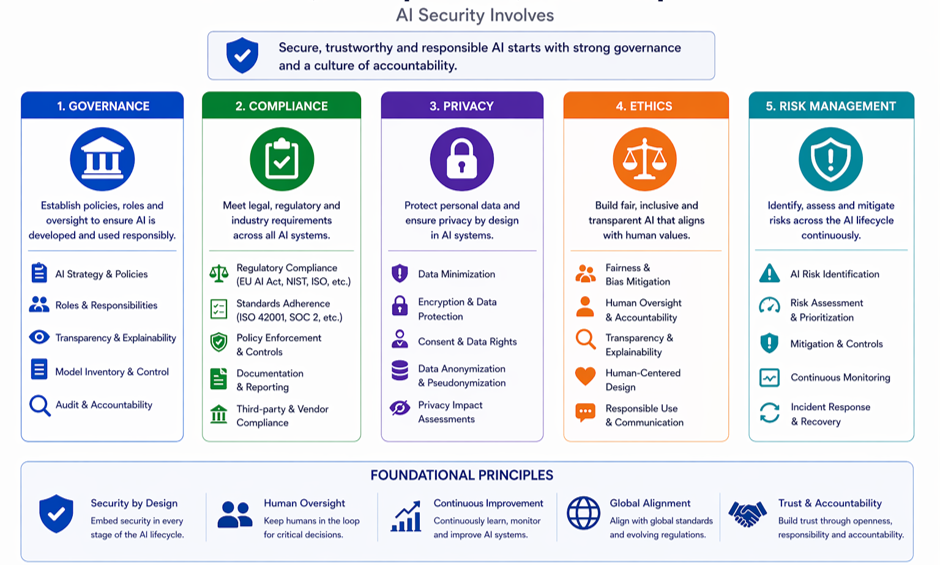 Figure 3: Governance, Compliance, and Responsible AI
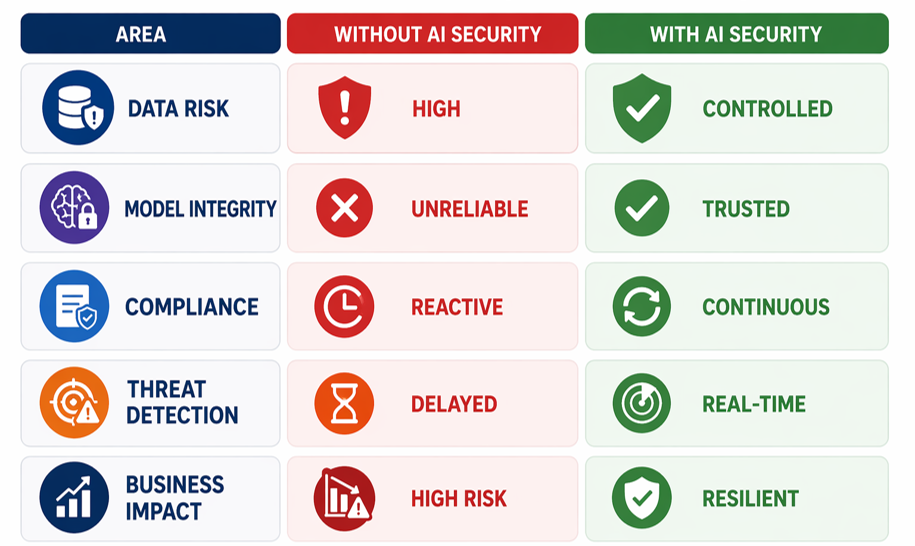 Figure 4: Overall Impact With/Without AI Security
Where Things Fall Short
Even with the right strategy in place, execution is where things get challenging. I’ve often seen gaps emerge when teams struggle to understand AI-specific risks, work in silos, or rely too heavily on traditional approaches.
In decentralized environments, especially where different teams build AI independently, consistency is usually the first thing that slips.
Why This Matters More Than It Seems
AI security is often treated as an extension of cloud security, and it isn’t. This directly shapes business decisions, customer trust, intellectual property, and regulatory compliance.
A single failure can cascade quickly leading to incorrect outputs, compliance issues, and reputational damage. Organizations that invest heavily in AI but underinvest in security are taking an uneven risk. And that imbalance eventually shows up.
Looking Ahead: What’s Coming Next
If you look at where things are heading, AI environments are only getting more complex. Autonomous agents, multi-cloud setups, real-time analytics, and edge AI are quickly becoming the norm while attackers are evolving just as fast.
What I’m seeing is a clear shift; organizations that stay ahead are moving away from reactive thinking and leaning into proactive design, with Zero Trust, AI-aware controls, and continuous monitoring becoming essential. Most organizations aren’t breached because security failed; they’re breached because assumptions went unchallenged.
Conclusion
If you look closely, cloud-based AI brings real value but also new risks. Securing these environments takes more than traditional controls; it demands a different, more deliberate approach. In practice, securing AI systems comes down to getting a few things right; protecting data, securing models, tightening APIs, hardening cloud infrastructure, managing identities carefully, and not losing visibility at runtime. The most successful organizations will adopt a “Secure by Design” approach where security is built into every stage of the AI lifecycle.
In the AI era, security is no longer just about protecting infrastructure. It is about protecting how decisions are made and intelligence itself.
 Outcreate Your Business
Outcreate with LTM
Outcreate Together

It’s time to Outcreate